


Geschreven door Bjorn Hutgens, Manager sales
Geschatte leestijd: 5 minutes
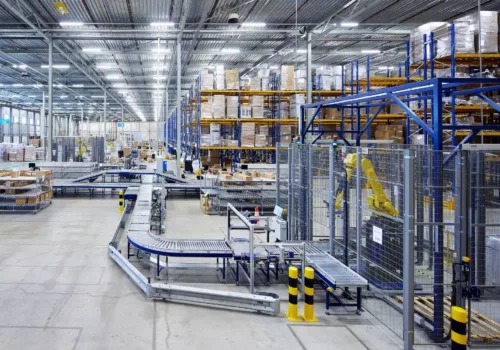
Growing warehouses often face the same problem: rising order volumes and expanding stock, but no easy way to add floor space. New construction is often not realistic because it takes time and can disrupt the operation. Automated storage offers another route: by storing goods more compactly and using the available height more effectively, warehouses can increase capacity within the same building footprint.
That is why warehouse capacity should not only be measured in square meters. In many facilities, the real opportunity is above the floor. For warehouse managers and logistics teams, the better question is not just: “How much can we store?” It is: “How can we store and retrieve goods more efficiently within the space we already have?” ARCO Solutions can help translate that challenge into a practical storage concept that uses the available space better and connects with the wider warehouse flow.
In this blog, you will learn:
- Why warehouse capacity is not only a floor space problem
- How unused cubic meters can create room for growth
- What to assess before choosing an automated storage system
Warehouse capacity is not only a square meter problem
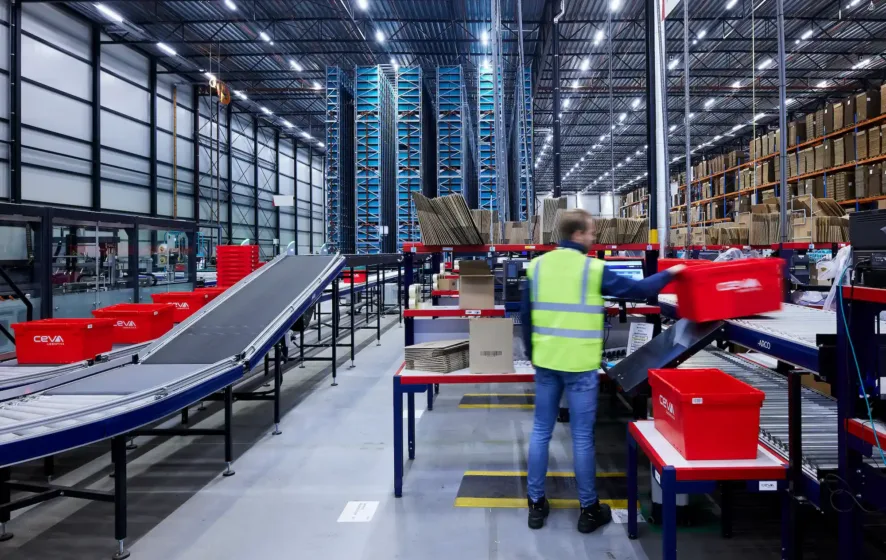
A warehouse can feel full even when the building still has space to use. The issue is often not the footprint itself, but the way products are stored and moved through the operation. In a conventional layout, much of the available height may remain unused. At the same time, operators may spend more time travelling between storage locations. As volumes increase, this creates pressure on both space and workflow.
The result is that a storage challenge becomes an operational bottleneck. Picking takes longer, replenishment becomes harder to plan and the warehouse loses flexibility. That is why capacity should be viewed as a combination of storage density and product flow, not just as the number of square meters available.
How cubic meters change the storage capacity discussion
The real shift is using automation to make storage more compact and predictable. Automated warehouse storage can help warehouses store goods in a smaller footprint while keeping products available for the next process step. Depending on the product type and operation, an automated storage and retrieval system can be based on concepts such as miniload or warehouse shuttle technology. These systems can store goods more compactly than many manual setups and reduce travel on the warehouse floor.
The benefit goes beyond storage density. Automated storage also improves how products are accessed and monitored. Instead of operators moving through the warehouse to find items, goods can be brought to a workstation or connected process step. This can support a faster flow with less manual handling. Automation also creates more insight into the internal supply chain. When storage movements are connected to software, teams can make decisions based on more reliable process data instead of assumptions from the floor. That helps warehouse managers see where capacity is available and where the process can be improved.
When automated storage systems become relevant
Automated storage systems are not the answer to every storage challenge. The right moment to consider them usually comes when manual or conventional storage starts to limit growth.
Common signs include:
- The warehouse is running out of space, but expansion is difficult
- Operators spend too much time travelling between locations
- Picking and replenishment compete for the same aisles or equipment
- Peak periods create pressure on both space and labor
- The number of SKUs is growing faster than the current layout can handle
- Storage, picking and packing are no longer balanced
- External storage locations are creating extra costs and complexity
In these situations, an automated storage and retrieval system can help structure the storage process more clearly. Goods are stored in a compact system and retrieved when needed.
Choosing the right storage concept
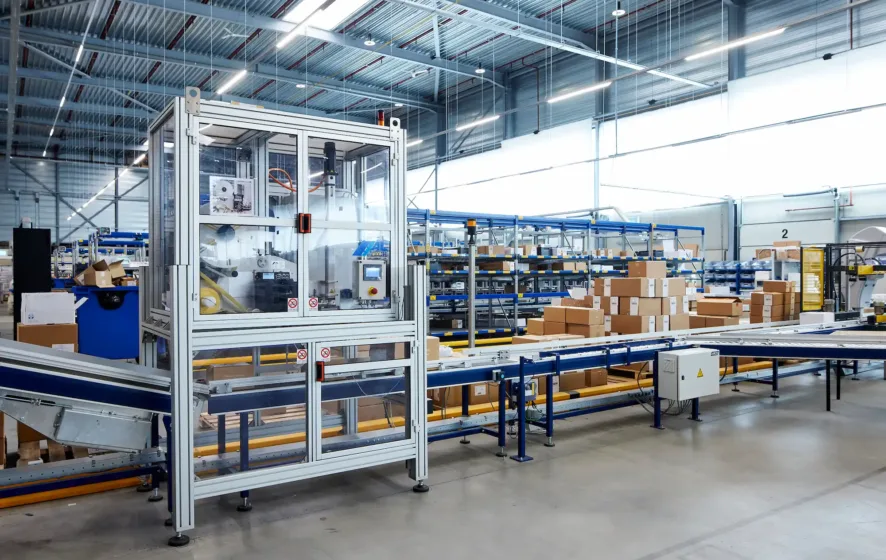
Choosing the right storage system starts with the operation. A miniload, shuttle system or other automated warehouse storage solution only adds value when it fits the products, processes and growth plans of the warehouse.
Important factors include:
- Product dimensions and weight
- Number of SKUs
- Stock depth per SKU
- Order profile and picking frequency
- Required throughput during normal and peak periods
- Available building height
- Inbound and outbound flow
- Connection to picking, packing and transport systems
- Software integration with WMS or WCS
- Service and maintenance requirements
- Expected future growth
A compact storage system can create more capacity, but it should not create bottlenecks elsewhere. If products leave storage faster than picking or packing can process them, the problem simply moves to another part of the warehouse. That is why the storage concept should be assessed together with the full intralogistics process. The best solution is not always the most automated one. It is the one that fits the operational reality and can grow with the business.
Why storage design must connect to picking, transport and packing
ARCO looks at storage as part of the full warehouse flow, not as a separate system. What happens before and after storage determines whether the solution actually improves the operation. Inbound determines how goods enter the storage process. Replenishment determines whether stock remains available at the right moment. Picking depends on clear access to the right products and quantities. Internal transport then moves goods between process steps, while packing depends on a steady supply of picked orders. Software connects these movements and helps the warehouse keep control over the flow towards outbound.
If one part is designed separately, the total system can become unbalanced. A high-density storage system may save space, but if the connection to picking is not well designed, operators may still lose time. A fast picking process may perform well, but if packing cannot keep up, orders will still wait at the end of the line. That is why ARCO approaches warehouse automation from a system integration perspective. Storage, internal transport, order picking, packing, WCS/software and service need to work together as one process.
Checklist: how to increase warehouse capacity without expanding
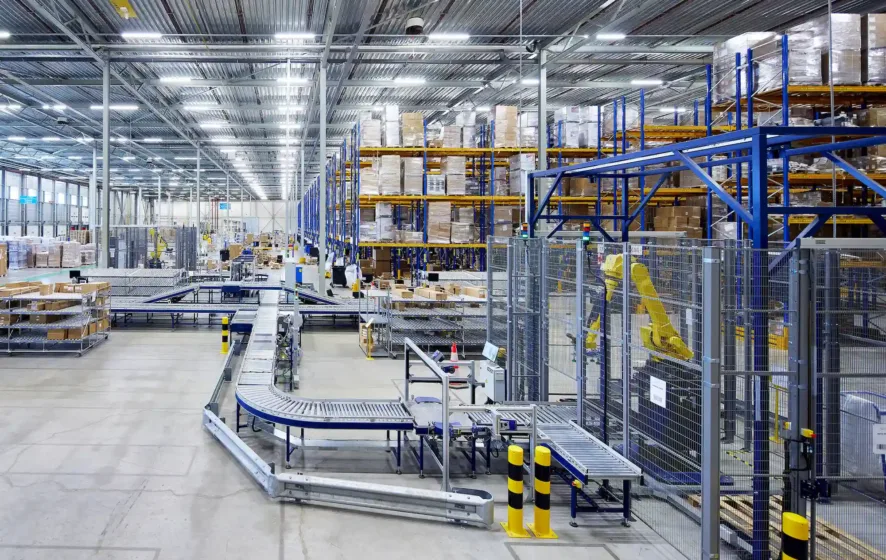
Use this checklist when exploring how to scale warehouse capacity within the existing building:
- Map how much floor space and height are currently used
- Identify unused or poorly used cubic meters
- Check whether aisles, manual routes or fixed layouts limit capacity
- Analyze which SKUs take up the most space
- Look at order profiles, peak volumes and picking frequency
- Assess whether manual travel is reducing productivity
- Review the connection between storage, picking, transport and packing
- Check whether WMS or WCS software can support a more automated flow
- Compare storage concepts, such as miniload or shuttle systems
- Include service, maintenance and future scalability in the decision
- Avoid choosing a storage system before the full process has been reviewed
This helps keep the discussion practical. The goal is not automation for its own sake. The goal is to create a storage setup that supports capacity, flow and control.
How ARCO Solutions supports storage automation as part of the full process
Scaling warehouse capacity without expanding the building requires more than a new storage system. It requires a clear view of how goods move through the entire operation.
ARCO Solutions develops and realizes automation solutions for warehouses, production environments and intralogistics processes. For storage challenges, this means looking at the role of automated storage systems within the wider process: inbound, storage, orderpicking, conveyor systems, packing, software and service. By approaching storage as part of an integrated system, companies can make better decisions about the right technology, the right layout and the right level of automation.
Want to know more?
Feel free to get in touch – we are more than happy to discuss all the possibilities, together.
Malfunction? Please, contact us
Will you challenge us?
Our technical experts are always looking for a new challenge. Has your company encountered problems for which there is currently no solution? Here at ARCO, we are known for delivering innovative, customized solutions.
- Our knowledge is your knowledge
- We never stand still
- Going beyond the best solution
What our customers say about us
“We saw great commitment and determination. ARCO didn’t leave until the system was running. That shared drive made the cooperation truly enjoyable.”
“ARCO delivered an automated solution that integrates seamlessly with our pick line. Their dedicated approach and smooth execution made it a partnership worth repeating.”

“Our cooperation with ARCO was excellent. Where we previously relied on manual and labour-intensive processes, we now have a fully automated system that makes our production far more efficient.”

“ARCO responded quickly and showed great creativity in the design and test setups. Our close cooperation made the successful implementation of the new packaging line possible.”

‘ARCO’s weighing line has had a major impact on our production. Our new system cuts product losses by up to 6%. It was a successful project and a rewarding collaboration.’

“ARCO is a no-nonsense partner that thinks in practical, affordable solutions. With their expertise, they build strong and efficient intralogistics systems. We look forward to working together again.”

Read the latest articles




FAQ
What is an automated storage and retrieval system?
An automated storage and retrieval system is a storage solution that automatically stores and retrieves goods. It can help create a more structured and compact storage process, depending on the warehouse setup.
When should a warehouse consider automated storage systems?
Automated storage becomes relevant when space, labor, picking routes or throughput start to limit growth. It is especially useful to assess when expansion is difficult or when manual storage processes create bottlenecks.
Is a miniload or shuttle system always the best option?
No. The right storage concept depends on product type, order profile, throughput, available height, software integration and the wider warehouse process.